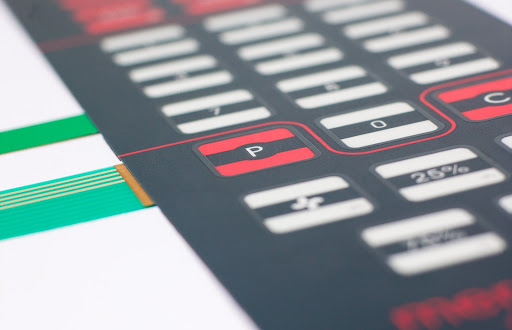
Membrane switch technology made it possible for companies to develop more convenient gadgets. Washing Machines, Microwaves, Television and various other devices work on the same technology. Compared to mechanical switches Membrane switches offer a softer feel. As the switch is more sensitive, users can easily change functions or shift switches. You can change operations and complete tasks without exerting much effort. The switch is also leak-proof and waterproof. This makes the technology ideal for businesses operating with harmful components in harsh environments.
Membrane switches are touch-sensitive devices developed by the printing, cutting and laminating of precision thin-film plastic materials. Low-voltage, low-current momentary electrical contact is made and retained by applying finger-tip force to the front surface of the switch. Membrane switches are primarily used with microprocessor-based control systems found in communication, medical, instrumentation and appliance products.
A number of industries now prefer Membrane switches technology for front panel solutions where frequent contact with water is an issue due to its sealed nature coupled with its reliability and ability to offer tremendous aesthetic flexibility. The technology although sophisticated is very simple to create at home and renders fairly effective. Let’s have a look at how to create membrane switches from the scratch
Step 1: Understanding the Keypad
The first thing to understand is how this keypad works. A matrix style keypad is a grid consisting of rows and columns and each button corresponds to a certain row and column. A 9 button keypad, will use 3 rows and 3 columns. The first button connects the link between Row 1 and Column 1 (R1C1) just like in battleship. 2 would be R1C2, 3 R1C3, and 8 would be R3C2. The main reason to do this is instead of having 9 different buttons to wire up, you would only need to wire up 3 columns and 3 rows for significantly fewer wires. This is very beneficial when you begin adding buttons. Adding one more row and column (2 wires) will add 7 buttons.
Step 2: Collecting Materials.
The best thing about this instructable is you probably already have all the things you need to build this in your house. This is a cheap, simple, and effective way of making a membrane keypad. You will need:
- Aluminum Foil *foil tape works too.
- Some sort of paper or flat material (what you choose here will affect the durability.)
- Glue (unless you’re using foil tape)
- And a spacer of some sort (a few layers of paper with holes cut in them may work I’m using double-sided sticky foam pads)
Step 3: Decision Time
Before everything else you have to decide what you want your keyboard to look like/how many buttons do you want on it. For this instructable, you can use a 3X3 setup with the numbers from 1 to 9 on it. Once you have finalized the look, draw it and decide where you want all the wires to go. Make a mock-up on your computer using any design software you like for e.g. Paint, Photoshop, and Illustrator and proceed to the next step.
Step 4: Mapping Out Your Cheap “Circuit”
We are going to be glueing on foil to make a flexible, cheap, however effective circuit board. What we need to do now is on our computer mockup we need to make how our columns and rows are going to be set-up. If you are using Photoshop make 2 new layers, one called rows the other columns. If you’re just using paint make a copy of the file called rows and another column.
We will put large black lines on these new layers, where we want our “Circuits” to go.
Now you need to flip one of your images vertically. Go ahead and print these out for the next step.
Step 5: Faux Circuit Making Time
Now that you have your printed templates you can start making your circuit. This is when you glue your foil where your rows and columns are supposed to go.
*NOTE* At this point it’s a good idea to re-make your front design to include labels for the hookup at the end of the leads with the labels. R1, R2, R3, C3, C2, C1. This is just going to make it easier for you.
Step 6: Final Assembly
In the next step, we will be putting it all together. Take your spacers and apply them to one side of your keypad. You could use silicone technically, the type used for caulking, as a really decent spacer. To apply these spacers we need to make sure that there is a hole in the centre of them so that the rows and columns can contact one another when they are depressed. You could use a hole-punch to get better results. The spacers make sure that other parts of our circuit do not come in contact with each-other incidentally.
Once your spacers have been applied, you may need to glue whatever you are using and put the other side of your keypad on top of this one. You have already made sure that everything was mapped out precisely on your template you designed on your computer.
Optional Step
To help your keypad enjoy a long healthy life, laminate it. It helps to provide structural support for the paper. Constant pressing can and will create depressions in the paper that sooner or later will cause your keypad to become ineffectively pressurize that button constantly.
]]>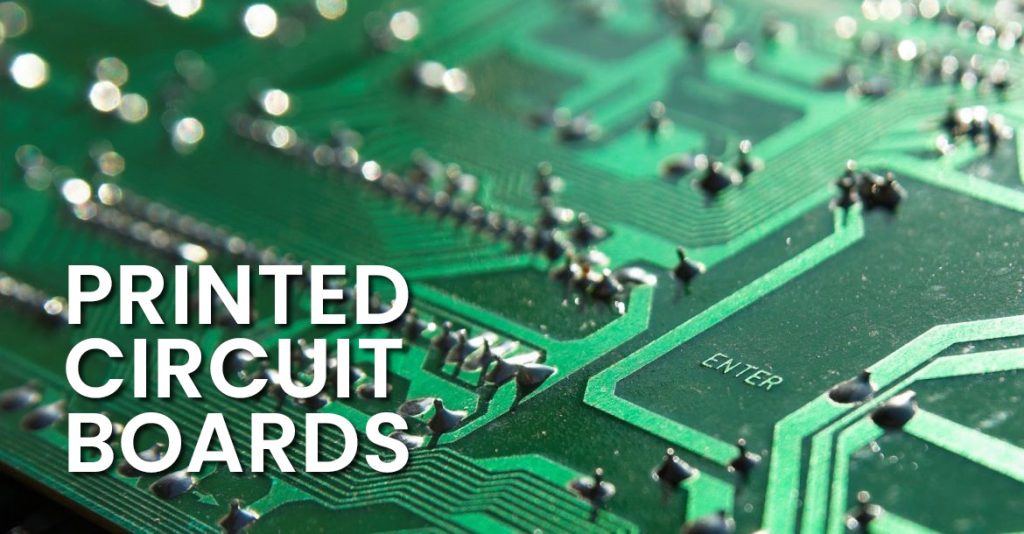
Many industries and devices today are powered by printed circuit boards in our society. With the technological advancement, the demand for different types of PCBs has also increased. The complexity of PCB fabrication has grown to align with the complexity of modern technology giving birth to single-layer, double-sided and multilayer PCB in its wake. Though be it a single layer, multilayer or double-sided PCB, it is an important subsystem to our everyday electronics. Undoubtedly the functionalities of all PCBs are different in many ways. Devices with limited functions can work well with single layer PCB while there is unlimited potential with multilayer PCBs for their collaboration with everyday new emerging electronics. From flexible to odd-shaped PCB fabrication, the range exploration is overwhelming. To ease this astounding knowledge of PCBs, let us get an understanding of the basics.
What is PCB?
PCB or Printed Circuit Board is an electric circuit board to provide mechanical support used in devices and is a pathway to its electronic components. It is created by combining different materials that are non-conductive in nature that easily supports copper-like fibreglass or plastic.
The use of multilayer PCB has grown exponentially in the current trend of technology. It came into existence to cope with changes in the electronic industry that have gone under in the last decade. Before multilayer PCB, single-layer or double-sided PCBs were the only ones to be used in the market. But due to its restricted functionality and lack of noise, stray capacitance and crosstalk limiting the performance of other devices. To overcome these hurdles multilayer PCBs were invented.
What is multilayer PCB then?
A multilayer PCB is made using three or more conductive copper foil layers. These appear to be layers of double-sided circuit boards, laminated and finally glued together with several layers of heat-protective insulation in between them. The entire construction of multilayer PCB is arranged in a fashion so that two layers are exactly placed on the surface sides of the PCB to connect to the rest of the electronic environment. The electrical connection between the layers is made through vias like plating through-holes, blinds and buried vias. Through this method and its application, a highly complex PCBs of varying sizes are created.
Multilayer PCBs are becoming more and more popular in electronics, packaging the power of a double-layer PCB into a structure that’s a fraction of the size to fit the new devices. There is a wide range of sizes and thicknesses to accommodate the right needs of their expanding applications, with variants ranging from four to twelve layers as required. Layers often come in even numbers, odd numbers of layers can cause problems in the circuit like warping. These issues can make the production unnecessarily costly. Most of the applications require somewhere between four and eight layers. Though this is not certain as mobile devices like Smartphones and Tablets tend to use around twelve layers, and some professional PCB manufacturers boast the ability of the product with nearly 100 layers. Multilayer PCBs with that many layers are pricy and are extremely rare in usage. Although multilayer PCBs are labour intensive, are specially designed by a set of specific PCB designers and are more expensive, they are the need for modern age technology. This is mainly due to the range of benefits they offer with their easy adaptability to the latest technology in comparison to single-layer and double-sided PCB varieties.
Multilayer PCB Benefits:
Multilayer PCBs are the core of the assembly of modern devices. From a technical point of view, they possess several design advantages.
Small Size: The most prominent benefit of using multilayer PCBs is in their size. The layered design of multilayer PCBs is inherently smaller than other PCBs with identical functionality. This serves as a major benefit to modern electronics, as the current trend is headed towards smaller, more compact yet more power-packed gadgets like smartphones, laptops, tablets, and wearables.
Lightweight Construction: Smaller the size lesser the weight in PCB. In the case of single-layered and double-layered PCB, multiple connectors are required to interlink separate single and double-layered PCBs. This is eliminated in multilayered design making it more compact. Being compact in nature it becomes beneficial for modern electronics that is geared more toward mobility.
High-Quality: Due to the investment of more work and planning that has to go into the creation of multilayer PCBs, multilayer PCBs tend to be better in quality than single and double-layer PCBs. Due to the investment of more time and energy in the making of multilayer PCBs, these tend to be more reliable.
Increased Durability: Multilayer PCBs also come with high durability as they are capable to withstand the heat and pressure that is applied to them. Multilayer PCBs use multiple layers of insulation between circuit layers, binding it all together with a bonding agent and protective materials which just increases there durability.
Single Connection Point: Multilayered PCBs are beneficial for gadgets where size and weight are constraints. As they possess a single connection point they become compact.
Powerful: Multilayer PCBs mostly are high density and have a greater capacity as well as speed in comparison to other variants of PCBs.
Multilayer PCBs are highly useful due to these benefits in most of the devices especially mobile phones and high functioning electronics. With the new norm of high functionality and smaller size, multilayered PCBs are highly preferred in the market.
It does possess its own set of benefits and drawbacks, though weighing the scale of pros and cons the weight is more towards the pros of these units. Yes, Today Multilayer PCBs are widely and rigorously used in most of the modern devices but they aren’t applicable to all device assembly. This limitation of multilayer PCBs is covered by single or double-sided varieties. They are expensive and need more design time, not to mention these units require skilled designers with wide experience for assembly to remove crosstalk and impedance related issues. Time investment in production is higher giving a lower turnover rate. These few drawbacks have a negligible effect in the current market that is swimming with more and more demand for multilayer PCBs. Due to an increase in the demand and supply of mobile deceives multilayer PCBs are at the peak of demand in the current market and it is certain with time its value is going upscale. Multilayer PCBs are the present and the future of the electronics market.
]]>
What is the Basic Difference Between Tactile and Non-tactile Membrane Switches?
After membrane switches and keypads were invented, they weren’t trusted to be the best quality method of inputting data. Though with the passing time membrane keypads and switches have had a huge transformation in their perceived image and have stood positively to the test of time. Now they are proven to be one of the best cost-effective and reliable input methods for many different applications. Due to the unquestionable benefits and advantages, these high technology subsystems have become irreplaceable to many industries. Mainly two types of membrane switches are used in the market, classified into tactile membrane switches, and non-tactile membrane switches. These switches can also be used by mixing and matching according to their functionality in the very same panel. A printed circuit board can be opted to use for the lower circuit to provide structural support in addition. These switches play an equally important role in modern technology, though they are different in many ways, the functionality, construction, and uses of these tactile and nontactile membrane switches are different in minimalistic yet significant ways.’ How exactly tactile and non-tactile membrane switches are different if the differences are minute?’ Let’s discuss that in detail.
Construction of Tactile and Non-tactile Membrane Switches:
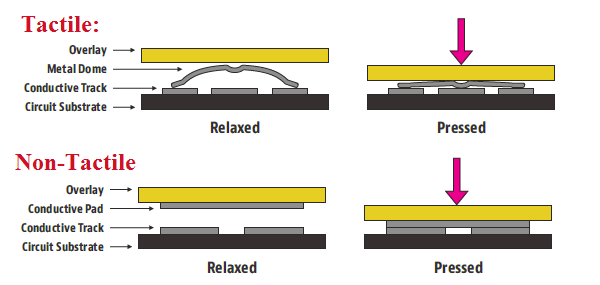
The construction is almost the same as the tactile and the non-tactile membrane switch. In the construction of the tactile membrane switch, there is a metal dome just below the surface of the overlay. Whereas in non-tactile membrane switch there is a conductive pad instead of a metal dome, again just below the overlay layer.
With the tactile membrane switch, the user gets tangible feedback when the button has been pressed. The metal dome once pressed provides momentary contact with the circuit layer. It is supported by the adhesive spacer layer and in the relaxed state, the dome legs rest on the outer rim of the primary pathway. When pressed, the dome makes contact with the secondary pathway right in the center, thereby completing the loop of the circuit. Materials like stainless steel, polydome or hydroform can be used to make these switches, in addition, it can be activated more than a million times.
While with the non-tactile membrane switch, separate feedback to the user is used to confirm activation. The activation can be done with light, sound or visual display. Non-tactile membrane switches are comparatively more reliable and have a high durability stand. It can be activated up to five million times in its life cycle.
The Functionality of the Tactile and Non-tactile Membrane Switches:
Tactile membrane switches are usually internally vented and are sealed from the environment surrounding it. This makes it stronger against contamination from outside particles making it useful for the medical industry. The tactile membrane switches is a momentary switch. Its construction defines its functionality. The significance of the construction is when it is pressed, the action is set into a flow and when the pressure is released the action flow stops. Its use can be easily understood through the example of keyboard switches, out of many of its functionalities. In the case of keyboard switches when the letter or symbol is pressed the action is inflow and the letter or symbol appears on the screen. And when the pressure is released the letter or symbol stops appearing as the action is stopped.
Non-tactile membrane switches are used to activate objects like backlighting of the control board monitor. When the button is pressed nothing appears on the monitor screen, instead an LED light will turn on or a beeping sound will occur to indicate that the activation has been done. These are just a few examples, elaborating one of the functions of these membrane switches out of many functions.
Uses of Tactile and Non-tactile Membrane Switches:
Tactile switches are sealed and usually vented internally making them preventive to outside particles in the surrounding environment. Due to this quality, it has been widely adopted by the medical industry. These switches carry out a small number of functions, are easily integrated with portable devices and have optimal visibility, additionally, lightweightedness adds to its value for medical industry devices. Throughout the medical facilities, these devices are used like hospital bed controls, ultrasound systems, monitoring equipment, thermostats and many more. These switches are vulnerable to bacterial attacks or cleaning products, making it essential for the use of materials that can be resistant to these infectants, making them ideal for healthcare or medical facilities. Non Tactile membrane switches are whole self-accommodated units that do not provide feedback. Often supported by audio signal or visual display to ease out the use for the operator. Most commonly seen in microwaves, these switches give a beeping sound to indicate that action has been activated. It allows keypad shaping and sizing customization which makes it most preferable for designers and engineers in general. The transport industry hugely uses non-tactile membrane switches at gas stations and vehicle speedometers. Speedometers do not require any tactile input but need to constantly show the levels of speed as the user drives the vehicle. These switches are customized with embossing and backlighting function to provide more clarity to the rider. These are user-friendly and cost-effective designs.
Be it tactile or non-tactile membrane switches both have their significant roles in technology today. Widely used in many industries, they have been proven to be highly customizable subsystems for the evolving technology. Each one comes with its own set of pros and cons, it depends upon the manufacturer the usability of the switches and with that its application. Though we can state this with the assurance that both membrane switches are in technology for a long haul.
]]>
Technology has moved forward leaps and bounds in a small span. Membrane keypads and switches are innovative inventions of this technologically advanced era. Membrane keypads and switches are the functional and aesthetic user interface between the software and hardware control systems. We use these keypads in our daily lives, washing machines, dishwashers or microwaves operate through membrane keypads. The smaller and less clunky technology is, the better usage it generates. Membrane keypads and switches are examples of such advanced technology, bringing easy solutions to modern-day problems.
What are Membrane keypads and Switches?
Membrane keypads or switches are a whole, non-separate pressure design pads that have only outlines and symbols printed on a flexible flat surface. They function with electrical contact between the keypad surface and underneath circuits when the symbols on the keypads are pressed. The basic principle of functionality is that the contact behind the tactile key or non-tactile key closes an open loop of the circuit which terminates on the flexible tail (FPC). They are used in domestic and industrial applications on a wide variety. It ranges from backlit keypads, embossed versions, capacitive touch fascias and much more. They are customized to the customers’ individual requirements. A number of industries, electronics, white goods, medical, security and marine use membrane keypads and switches.
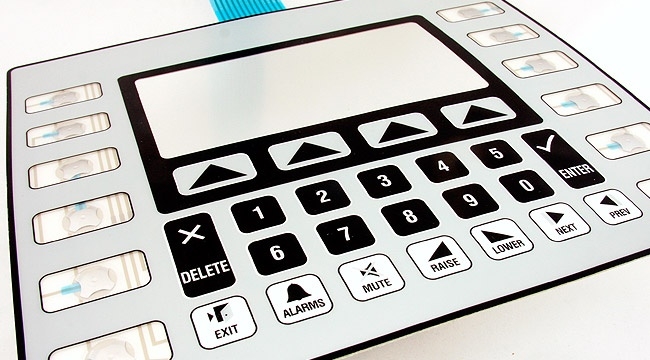
Benefits of Membrane keypads and Switches
Design: The design of membrane keypads and switches are created in a manner to keep them free of dirt and grime. It is a fully sealed surface, which is easier to clean and maintain. As there is no coagulation of any dirt or grime, the circuits function smoothly, making them more durable and sturdy in nature. Some of the designs are waterproofed. Adaptive designs are created to suit different customers according to their specific needs.
Versatility and Flexibility: The designs are adaptive to the specific needs of the buyer, designs are made to suit a specific product. The graphic overlay, symbols, material of the membrane keypad or switches, functionality, precise color to match the product and other specifics are for the customer to choose. An array of different industries as well as domestic sectors use membrane keypads and switches. From gym equipment like treadmills or domestic appliances like a washing machine to marine machinery, membrane keypads and switches are used on a varied scale. The material used for manufacturing isn’t rubber so they can be easily printed digitally, giving accurate and crisp graphics integrated with LED or with backlit membrane keypads and switches. Tactile or non-tactile whichever suits the clients’ needs. Flexible in size, to fit any machinery or product for use.
Durability: The material used to make these membranes vary according to budget and the functionality in regards to the product. Materials like Polycarbonate (also known to be Lexan) or Polyester (PET) are used for the production. Polyester is a bit expensive and is used where perks like heat stability for low resistance, raised keys, laser cutting is required. Polycarbonate is more an aesthetic choice, Ink keying, dye cutting, and forming are simple to create with this material. Cost-effective Polycarbonate won’t be effective while using solvent-based chemicals. Membrane keypad and switches being completely sealed offer easy cleaning and durability. Some offering waterproof material, some dust and grime free materials ensuring a longer life span. The membrane keypads and switches also have sub-surface graphics (printing is on the underside of the membrane) so that in time the visuals don’t degrade and cleaning won’t fade away the symbols. Keeping the identity of graphics alive for a longer duration. Adhesives are used to keep the material of the membrane keypad or switches in mind as well as the product they will be mounted on.
Enhanced Protection: Other than being extremely durable membrane keypads and switches have the advantage of providing better protection to the product it has been mounted on. Its design servers to be waterproof which can protect your machinery from any water or liquid mishap that might happen. Let’s consider a treadmill, people drink water or protein shakes while workout sessions and the entire machinery is only vulnerable from where it is operated. Using a waterproof material for treadmills membrane keypad can protect the owner from the huge bill for repairing with any liquid mishap. Similarly, membrane keypads and switches can survive harsh UV lights where other types of machinery are damaged by exposure. Also, they are resistant to few chemicals making these a full protection package, ideal for your machine. Guaranteed protection with different materials just to suit your needs.
Cost-effective and Easy Repairs: Membrane keyboards are inexpensive and are resistant to dirt and liquids the other keyboards making them ideal for use. These are much easier to repair in comparison to other mechanical keyboards. The circuit design with an overlay makes the process of the membrane keypads and switches much easier. In case of damages, you can easily remove the overlaying membrane, correct the damages in the circuit and simply place back the overlying membrane to make it fully functioning again. Cost-effective as well as simple to repair or modify where the product has an issue with the membrane keypads and switches. The easy repairing makes it so versatile in so many industries.
Membrane keypads and switches are Cost-effective full package deals, which is getting better and updated day by day to fit the ever-advancing technology. Membrane keypads and switches have brought significant changes in technology since its application from the early 1980s on home computers. Today it is widely used in normal computer keyboard as well with an array of dome switches just to give positive tactile feedback. As widespread the use of membrane keypads and switches is today, we can easily say it is one of the revolutionary inventions of modern times
]]>