
About Us
Leading manufacturer of custom membrane switches, keypads, and HMI solutions.
Please fill out the form below and we will get back to you as soon as possible.
Leading manufacturer of custom membrane switches, keypads, and HMI solutions.
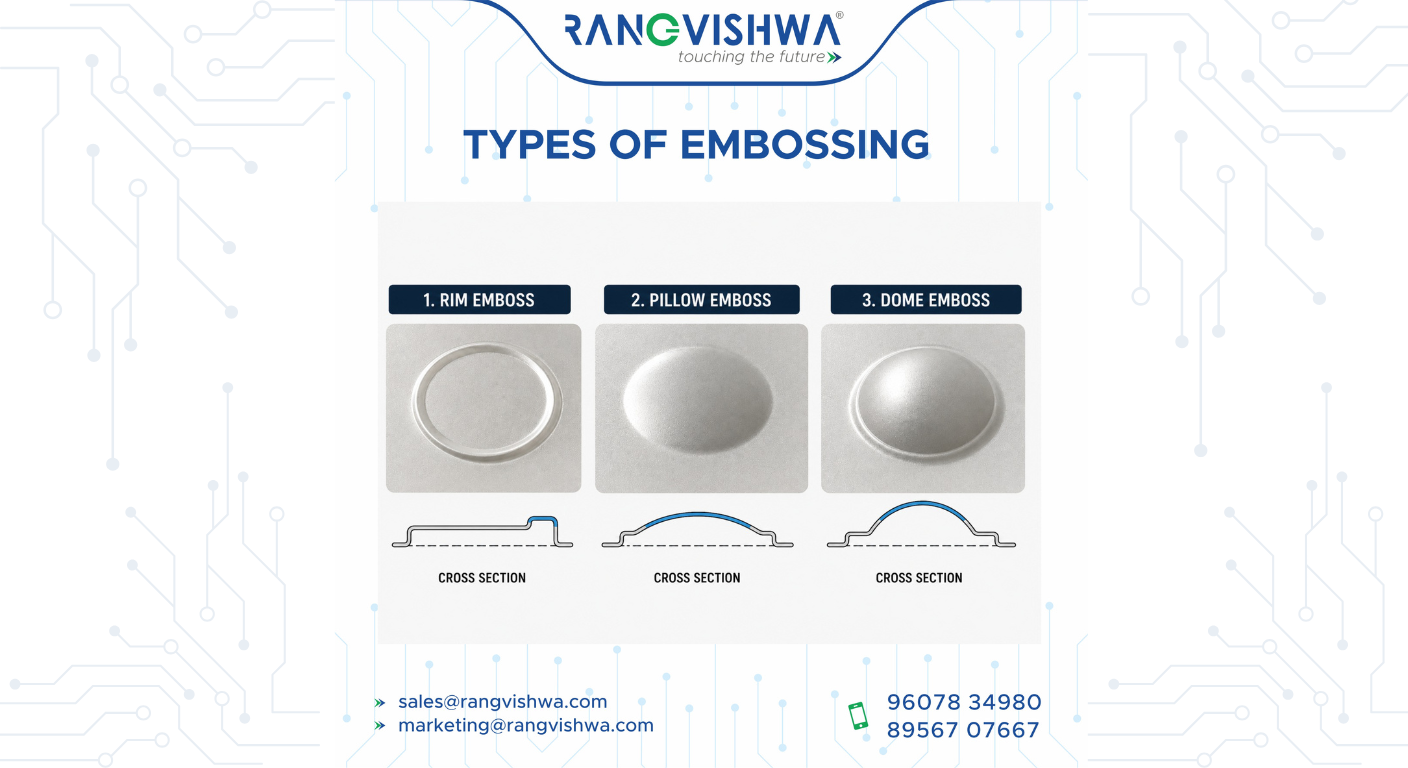
Embossing creates raised key areas on graphic overlays to improve usability and appearance.
Small design feature, big impact on user experience.
Raised edges with a flat center. Creates a clear boundary around each key while keeping the middle flush.
Popular for industrial keypadsEntire key area is raised with a smooth, rounded profile. Provides a soft, cushioned feel under the finger.
Ideal for medical devicesDome-shaped emboss that precisely matches the metal dome profile beneath. Offers the most tactile feedback.
Best for high-use applicationsEmbossing is achieved during the graphic overlay manufacturing process using specialized dies and heat/pressure forming techniques. The raised profile is created by pressing the overlay material—typically polyester or polycarbonate—into a mold that shapes the raised key area.
| Feature | Rim Emboss | Pillow Emboss | Dome Emboss |
|---|---|---|---|
| Tactile Feel | Moderate | Soft & cushioned | Firm & positive |
| Key Identification | Good (clear edges) | Moderate | Excellent |
| Dome Alignment | Good | Good | Excellent (matching profile) |
| Best For | Industrial controls | Medical devices | High-use keypads |
| Profile Height | ~0.3–0.5mm | ~0.5–0.8mm | ~0.8–1.2mm |
Embossing is a small design feature that delivers a big impact on user experience. It transforms a flat, generic keypad into a professional, intuitive, and durable interface that users can operate confidently—even in low-visibility or high-stress conditions.